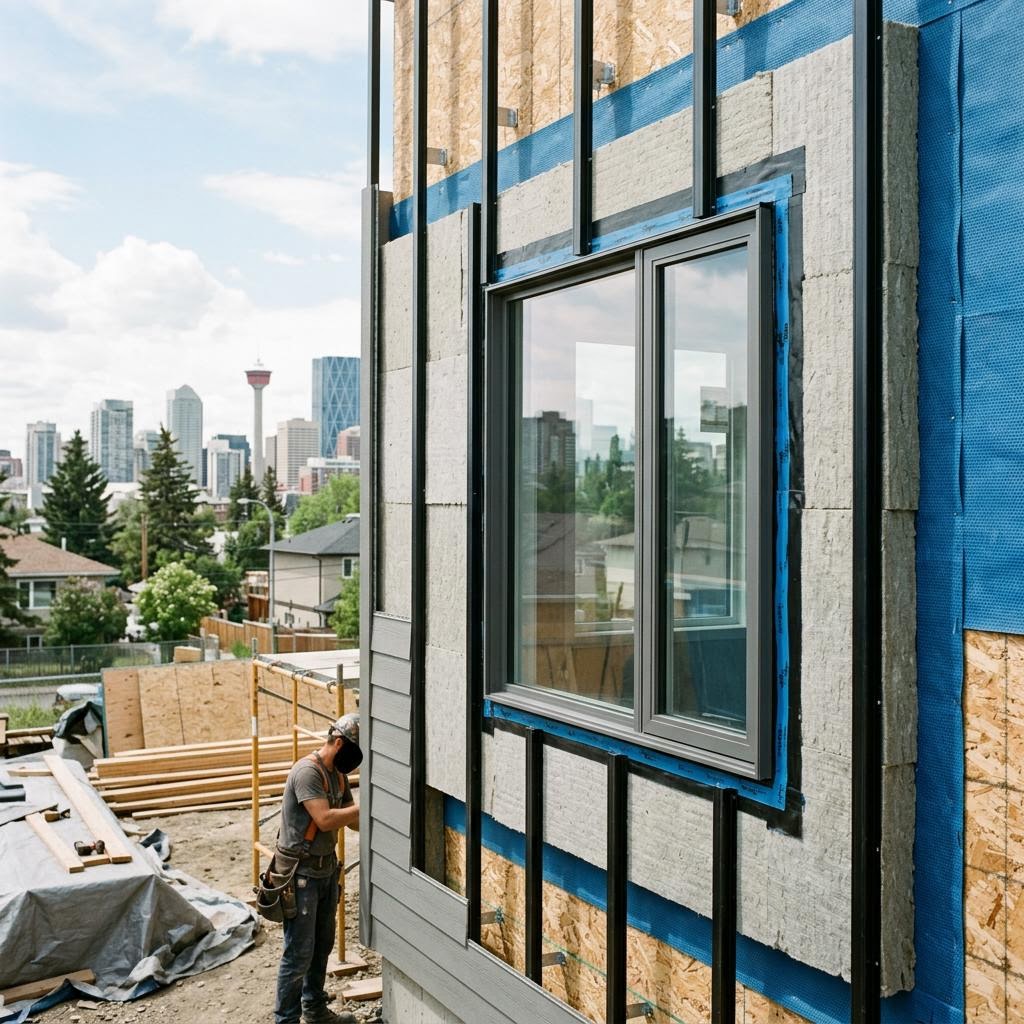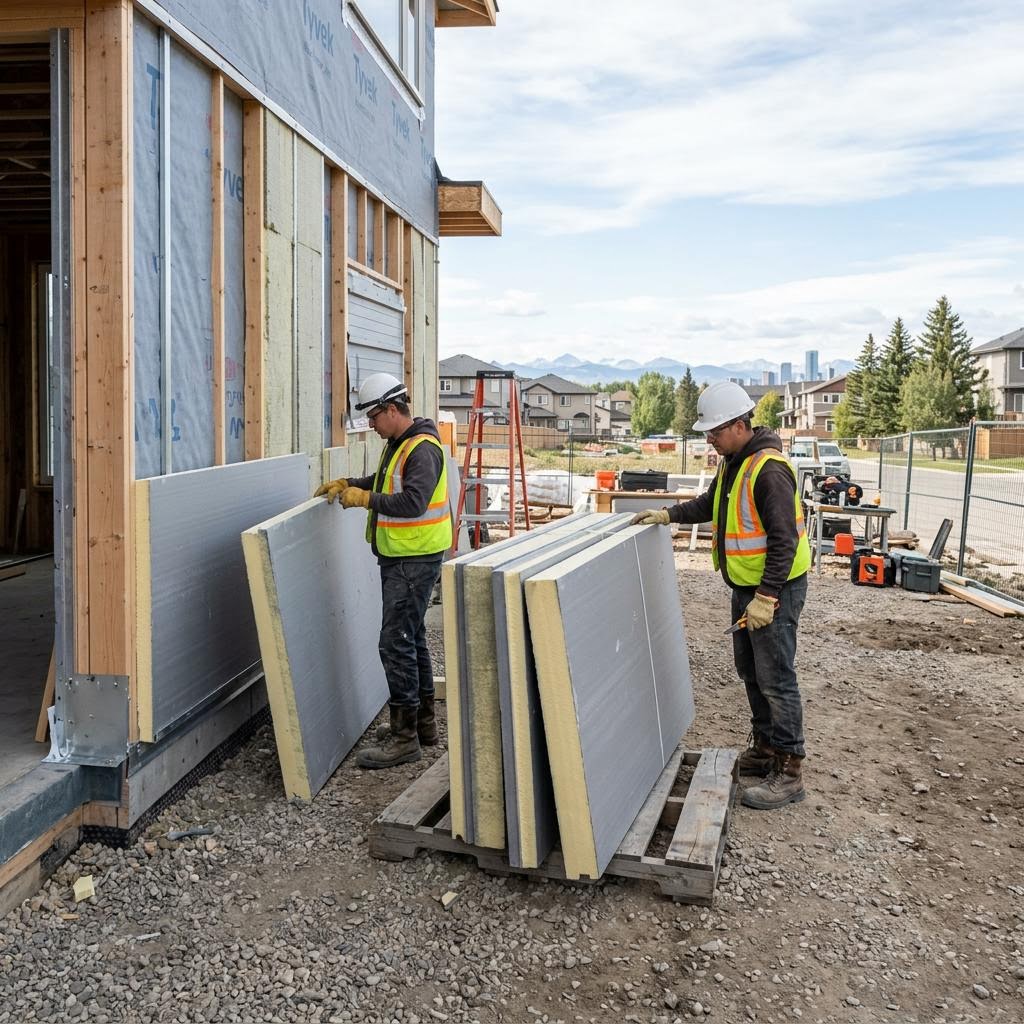
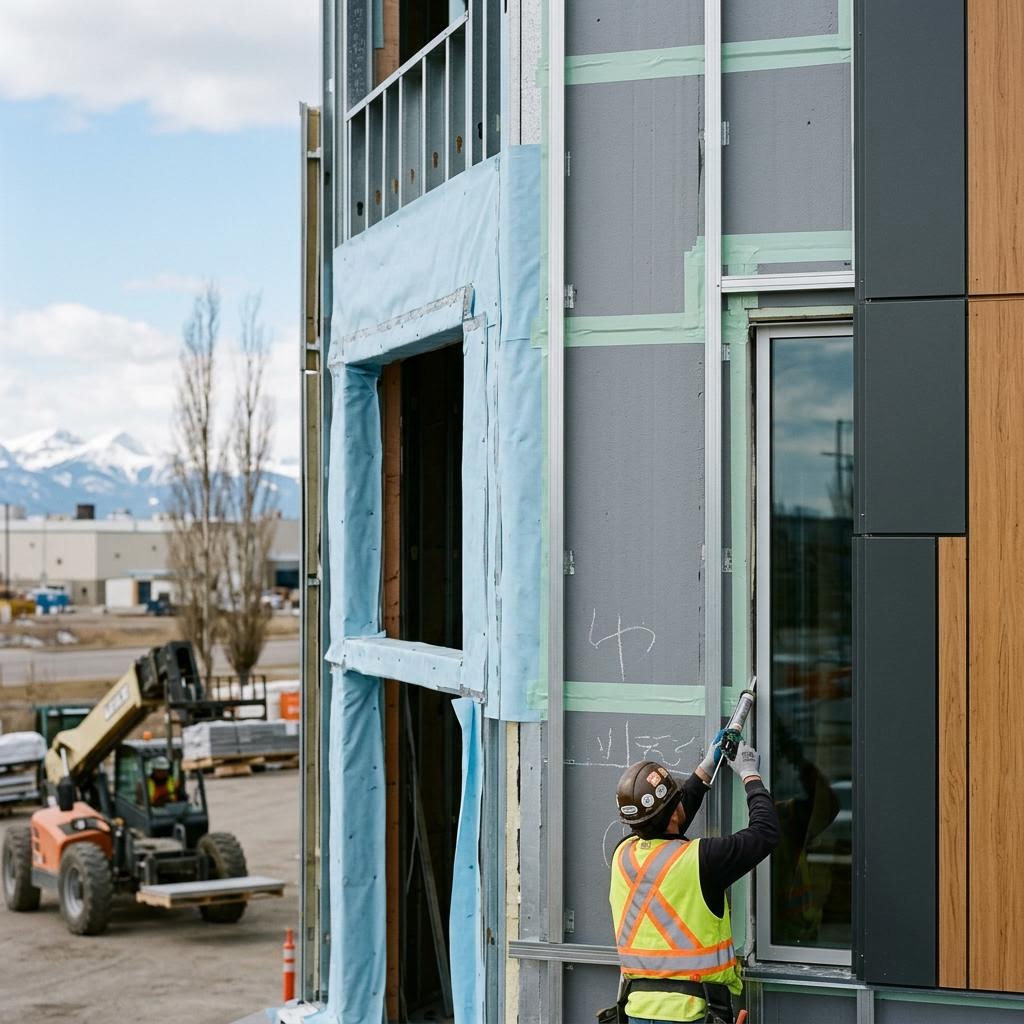
A Calgary wall assembly needs to do several jobs at once: limit heat loss, control air leakage, manage moisture and carry its exterior finish. Buying a board with a high insulation value addresses only part of that work. The connections around windows, foundations and roof edges often determine whether the finished envelope performs as intended.
These seven brands offer different parts of that assembly. Use the comparison to choose which technical teams to involve, then ask them to address the same wall section and project conditions. A manufacturer's national catalogue does not guarantee local stock or approval for every application.
For adjacent planning decisions, compare our continuous insulation for Calgary buildings, rigid insulation in Calgary and Alberta, brewery drainage systems in Calgary and food-processing floor drains in Calgary.
Seven brands to bring into the design conversation
Quik-Therm: insulation systems with integrated functions
Quik-Therm continuous insulation wall systems are a useful starting point when a design team wants insulation products that can contribute to more than one control layer. Identify the exact product before discussing air or vapour control: a function documented for one system should not be assumed across the range. Ask for the complete detail at seams, penetrations and transitions, including the accessories required to deliver that function.
SOPREMA: connecting membranes, insulation and accessories
SOPREMA's wall range includes insulation and air- and vapour-control products. It is relevant when responsibility for compatibility between layers needs to be clearly defined. Bring the proposed substrate, cladding and installation season to the discussion; product compatibility on paper is only useful if the specified primers and membranes can be installed under site conditions.
DuPont: weather barriers and rigid insulation
DuPont's building portfolio includes Tyvek, Styrofoam and Thermax products. Compare the proposed combination of layers rather than assuming every product performs the same role. For an exterior retrofit, ask how window flashings connect to the new weather barrier and how added wall thickness affects sills and penetrations.
ROCKWOOL: exterior stone-wool insulation
ROCKWOOL's Comfortboard range provides a stone-wool route to continuous insulation. Its vapour permeability and noncombustible material properties are relevant to assembly selection, but neither replaces a complete moisture or fire review. Establish how cladding loads transfer through the insulation and which board is suitable for the intended application.
Atlas EnergyShield: polyiso wall-board options
EnergyShield is a polyisocyanurate insulation family to discuss when wall thickness and facer properties matter. Request the exact Canadian product documentation, thermal design values and permitted uses. Do not substitute one facer or thickness for another without reviewing the effect on the assembly.
Johns Manville: documented polyiso assemblies
Johns Manville's AP foil-faced insulation provides another polyiso comparison. Its technical library is useful for reviewing installation details and available evaluation documents. Confirm that the selected Canadian application, fasteners, joint treatment and exposure conditions match the documentation supplied with the quote.
SIS Panels: structural insulated sheathing
SIS Panels combines structural sheathing and exterior insulation. Its Calgary-area presence makes it a relevant conversation for local builders evaluating fewer separate installation steps. Ask the designer to check structural fastening, panel joints and openings as one coordinated system; an integrated panel still needs deliberate connections to the rest of the building.
Three Calgary details to settle before ordering
First, specify the installation conditions. A membrane or tape may need a prepared, dry substrate and a particular application temperature. A construction programme that runs into cold weather should include compatible products, storage and temporary protection rather than relying on a general claim of winter suitability.
Second, compare effective assembly performance. Framing, clips and other attachments interrupt the insulation layer. Ask for the wall's calculated performance using the actual cladding support arrangement, not just the board's nominal R-value.
Third, draw the transitions. A continuous line through a wall section should show where air, water and thermal control continue at windows, balcony connections, the foundation and the roof. If that line stops at a trade boundary, assign someone to resolve it before installation.
Build a useful submittal package
Give competing suppliers the same drawings, substrate description, cladding weight, exposure conditions and delivery address. Request product data, relevant Canadian evaluation information, installation instructions, compatible accessories and exclusions. Have the project designer confirm the applicable Alberta requirements and Calgary approvals for the finished assembly.
A productive shortlist ends with a coordinated wall detail and an accountable installation scope. A cheaper board is not a saving if the quote omits the flashings, support system or labour needed to make it work.