Rigid insulation is used in walls, roofs, foundations and beneath slabs, but a board suitable for one location may be unsuitable for another. Calgary builders should start with application, required performance and installation conditions. Colour, thickness and a headline R-value do not fully identify a product.
For a broader comparison, read our Calgary building-envelope product guide and continuous insulation strategy guide. Drainage design is a separate concern; our commercial drainage planning guide covers that topic.
Begin with the building location
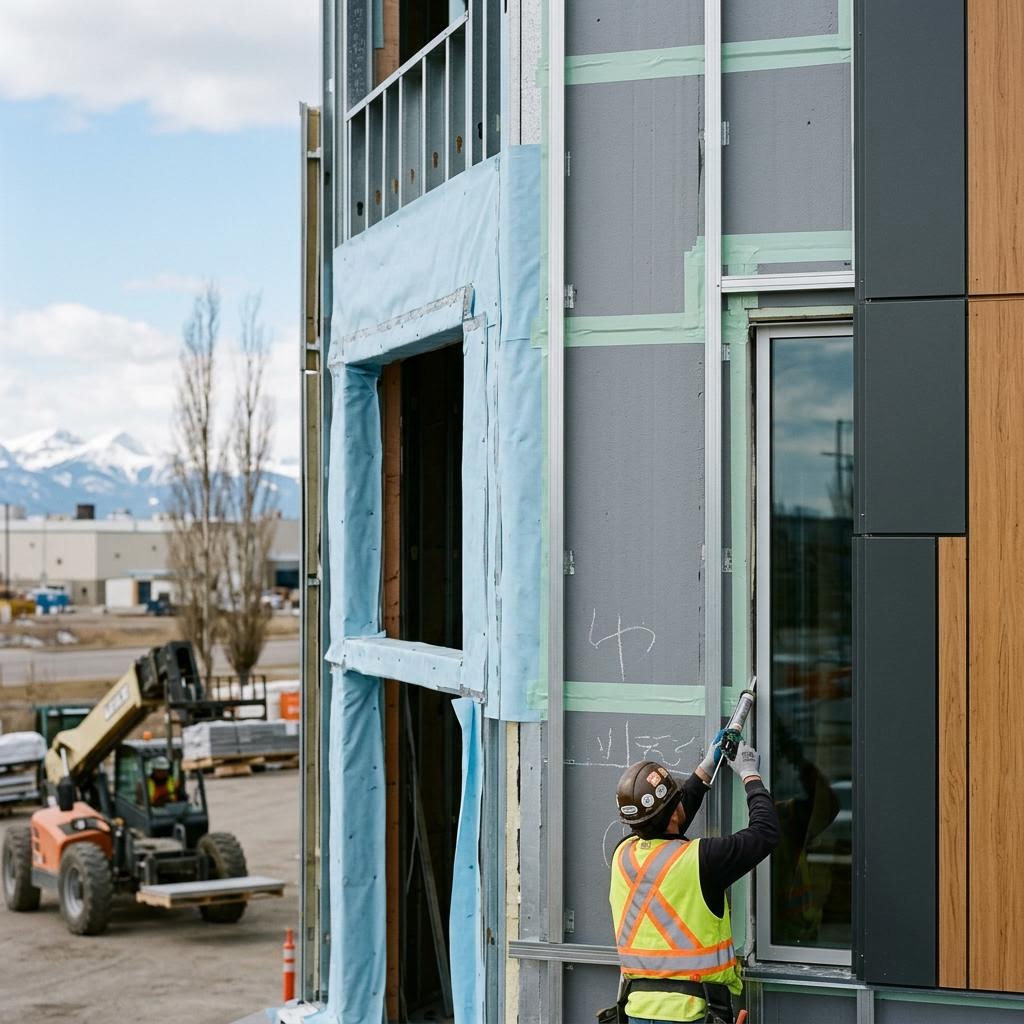
For a wall, consider cladding attachment, air and water layers, fire requirements and drying strategy. A foundation needs moisture, protection and installation review. Under a slab, address loads and the exact product’s suitability. A roof needs insulation compatible with its membrane, attachment and system requirements. Put the application into the request for pricing.
Understand the material choices
EPS systems
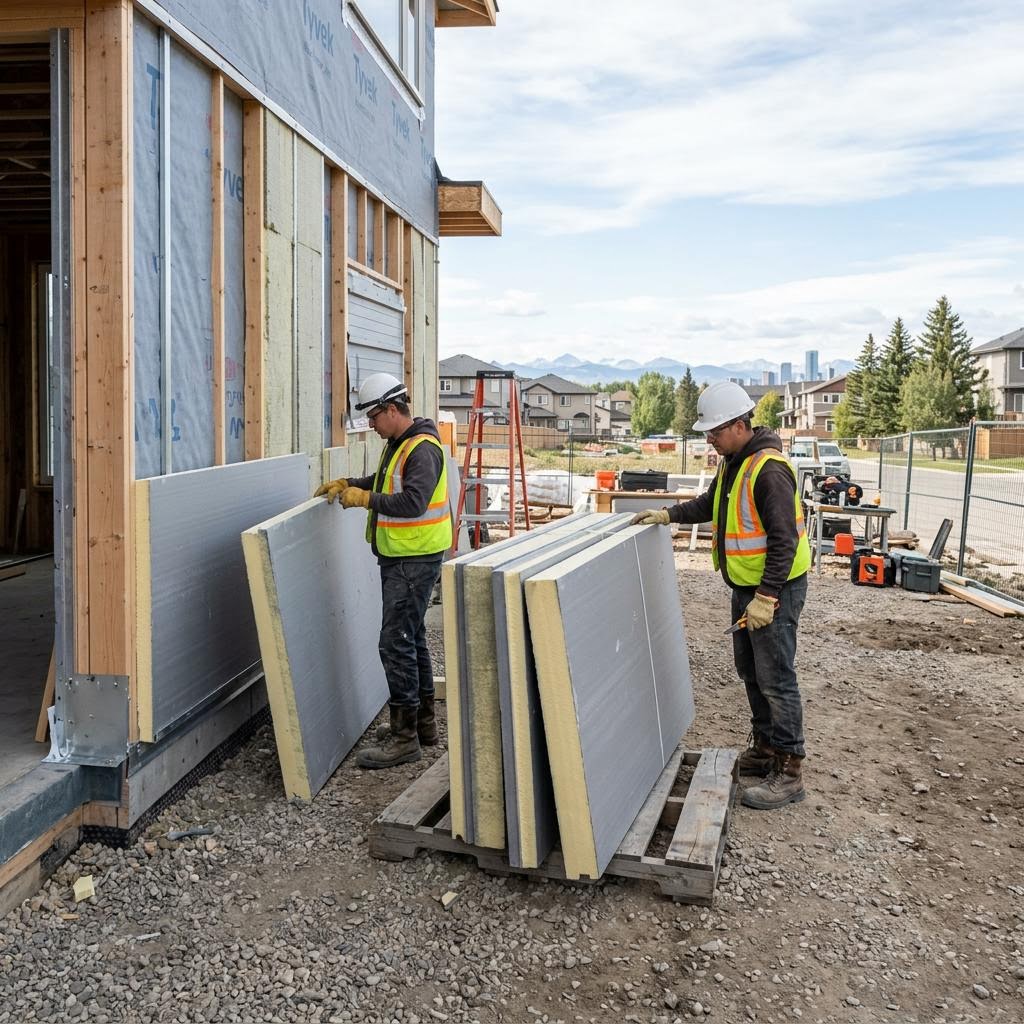
EPS products have different grades, facers and configurations. Quik-Therm rigid insulation systems are one manufacturer option to discuss for faced EPS-based systems. Confirm the exact grade and documentation; do not assume all EPS boards share compression, moisture or control-layer properties.
XPS
XPS is represented in product ranges including DuPont and SOPREMA. Ask for thermal design data and suitability for the actual exposure and loading.
Polyiso
Atlas EnergyShield and Johns Manville provide wall-insulation options, while other families are designed around roofing. Compare applicable thermal value, facer properties and installation requirements.
Rigid stone wool
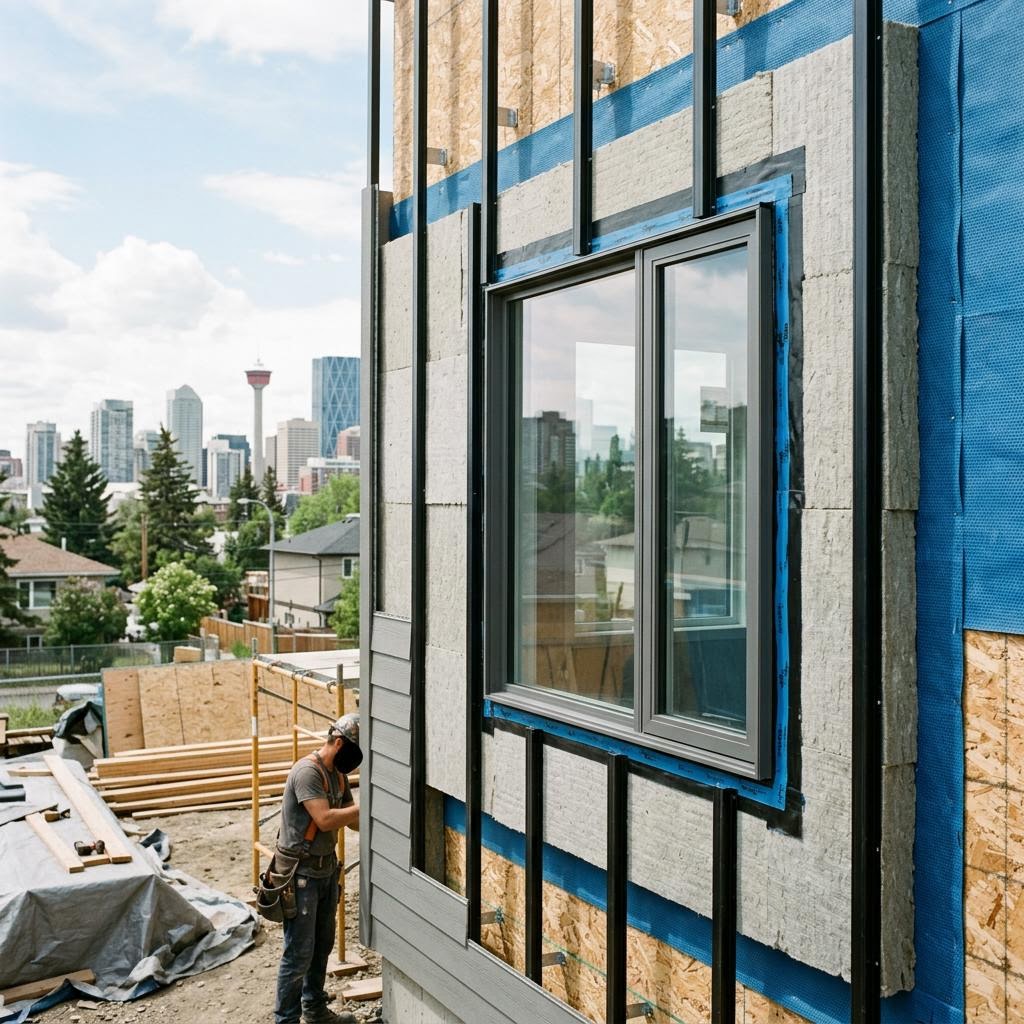
ROCKWOOL exterior boards may suit some applications. Evaluate their documented properties and support details; do not substitute stone wool for foam, or the reverse, without assembly review.
Read the technical sheet in order
Confirm full product name, grade and facer, then intended uses and limitations. Review thermal performance, compression, water and vapour characteristics and installation instructions. Canadian documentation for a material does not prove that every assembly incorporating it meets project requirements.
Compare installed cost
Include waste, cutting, joints, tapes, compatible adhesives, fasteners, protection and labour. Calculate quantities from drawings using board dimensions and packaging, then confirm delivery, unloading and storage space at the Calgary site.
Questions for an Alberta supplier
- Is this exact product and thickness available, or is the quote a substitute?
- Which Canadian technical documents and instructions apply?
- What other components are required?
- What are storage, weather-exposure and installation limits?
- What is the lead time and who answers technical questions?
Avoid the universal R-value shortcut
Required insulation depends on building, assembly and applicable requirements. Thermal bridges and installation details affect performance. Use a documented design and identified product, then compare suppliers on availability, complete cost and technical support.