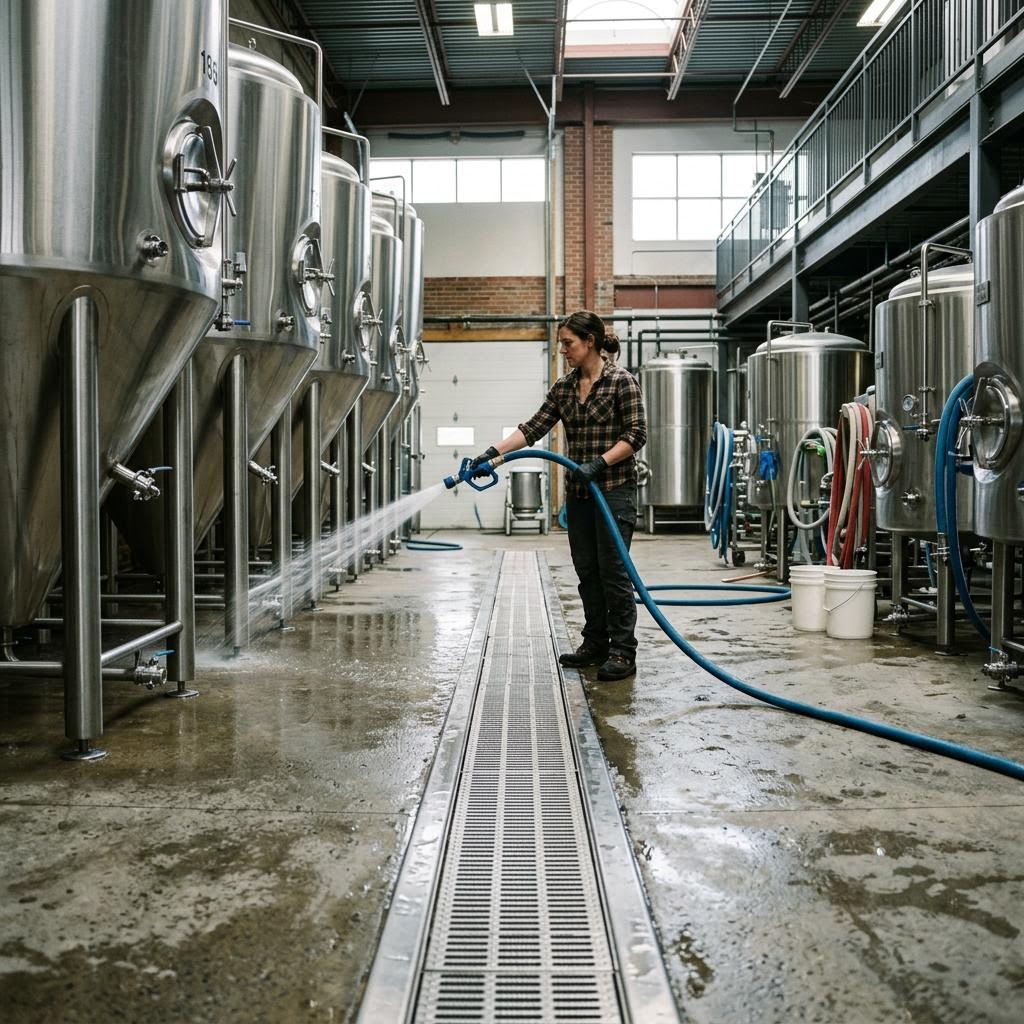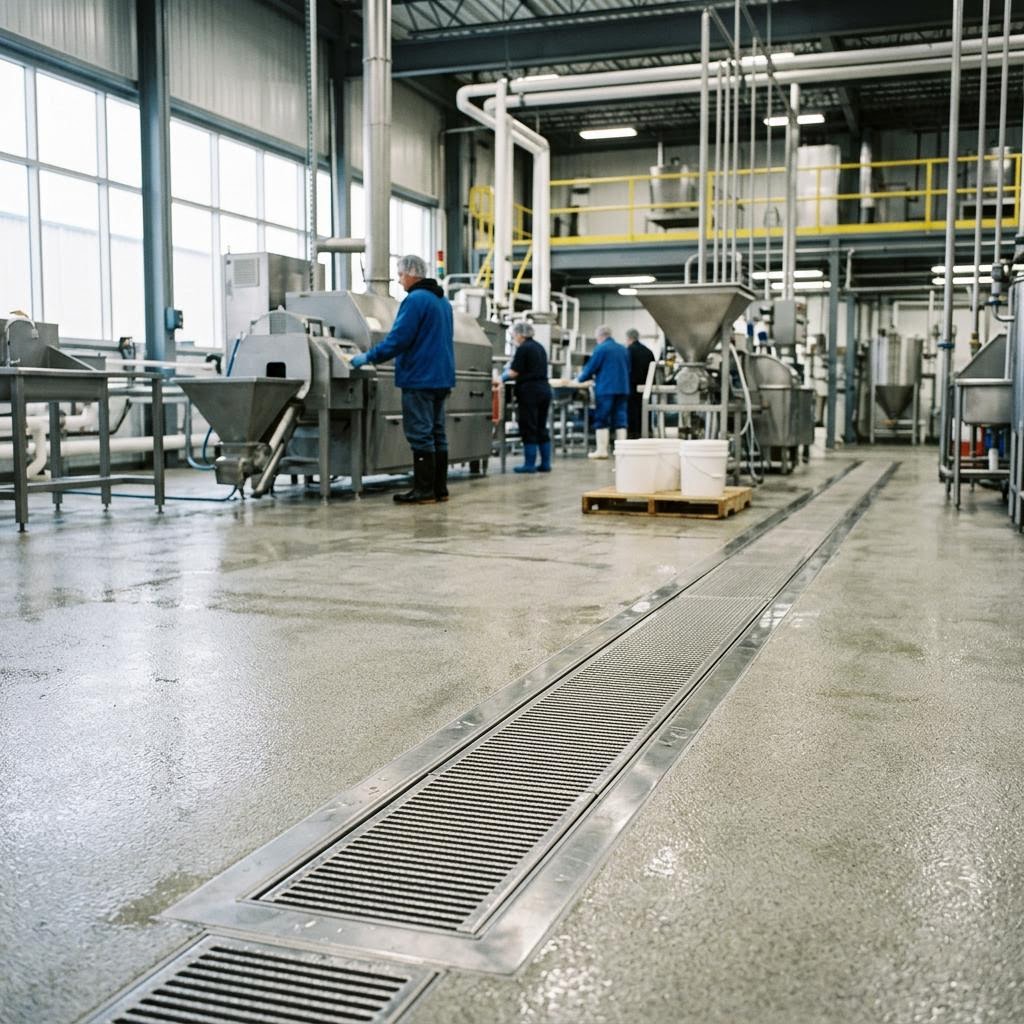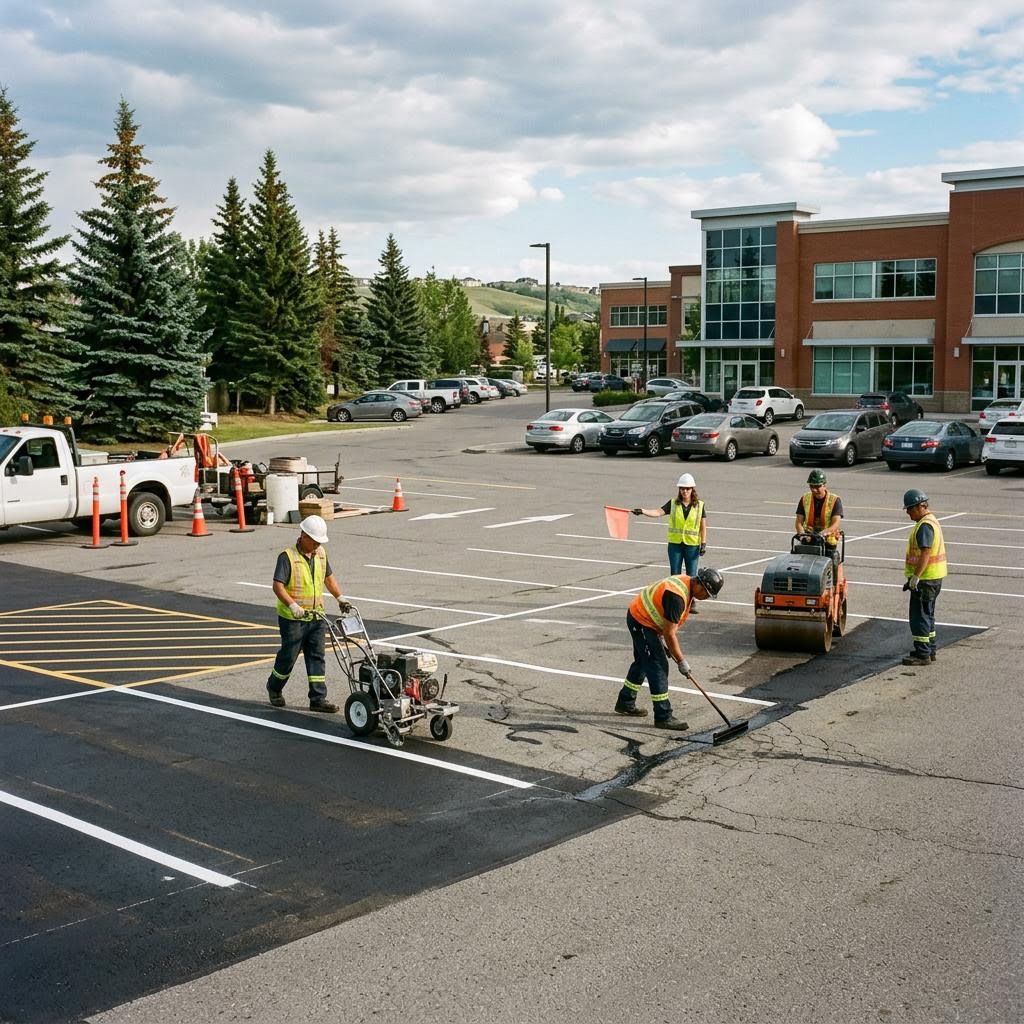
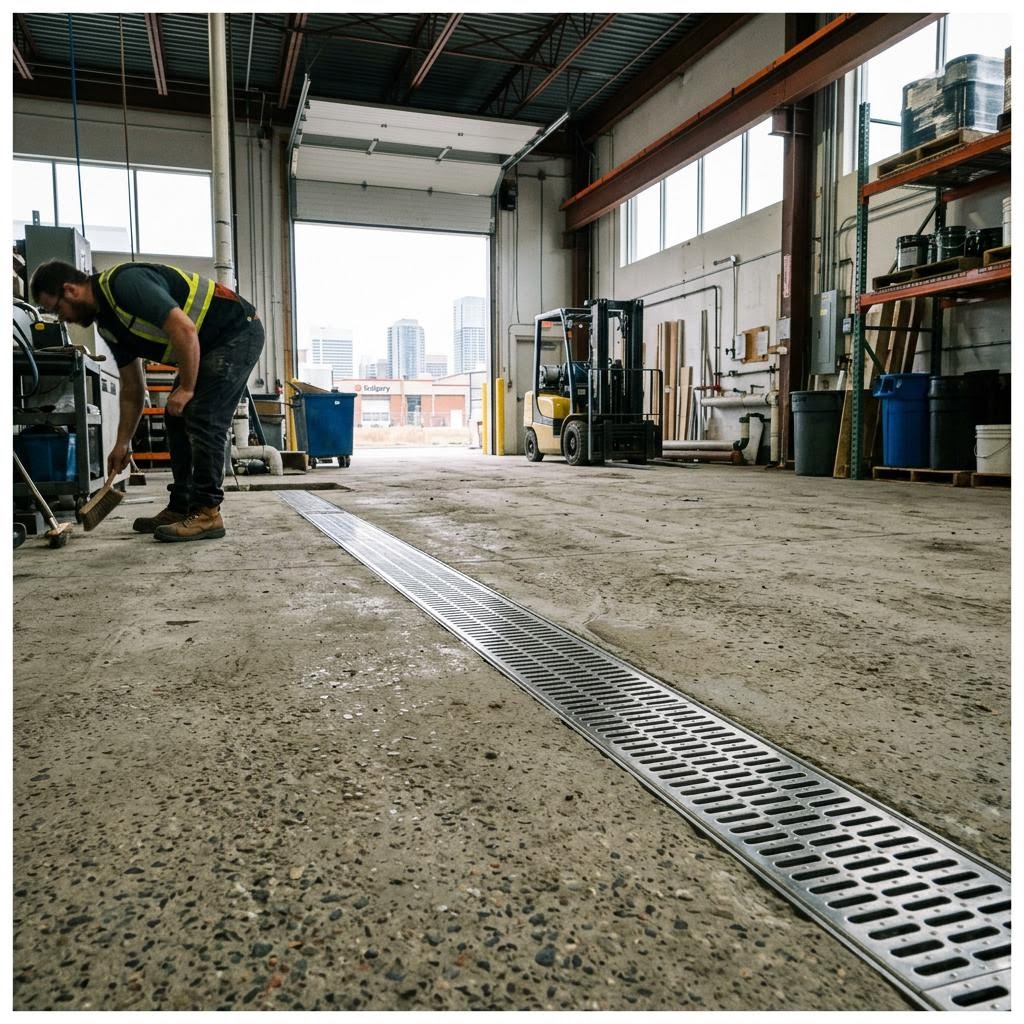
Trench drains collect water along a line, but systems sold under that name serve very different environments. A loading apron, food-production room and pedestrian entrance have different demands for load capacity, corrosion resistance, cleaning access and appearance. Define the application before comparing manufacturers.
For related commercial drainage planning, see our brewery drainage design guide and food-processing floor drain guide. For exterior maintenance context, use the Calgary parking-lot maintenance guide.
Match the product family to the project
Slot Drain Systems
Slot Drain Systems 10,000 Series trench drains are an option where a narrow surface opening and fewer removable grates are desired. Compare the exact material and model, debris removal, inspection and traffic-load requirements.
ACO
ACO has surface-water and building-drainage families. Keep exterior runoff and hygienic interior requirements separate; a shared manufacturer does not make applications interchangeable.
Zurn
Zurn offers trench-drain components and supporting drainage products. Confirm exact model, material and load documentation rather than applying catalogue-wide capability to every system.
MIFAB
MIFAB’s range includes trench drains, grates and stainless products. Identify included components, accessories, connections and collection devices.
Watts Dead Level
Dead Level provides modular channels with model-specific channels, frames and grating. Review installation and concrete requirements; pre-sloped geometry does not remove elevation and outlet coordination.
AWI and BLÜCHER
AWI fabricated stainless drains and BLÜCHER stainless drainage are relevant where industrial cleaning and material compatibility drive selection. Provide washdown chemistry, temperatures, solids and equipment loads.
Follow water beyond the channel
For a driveway, loading area or commercial entrance, map catchment and the route to an approved discharge point. Include snow storage and sediment. A trench drain does not establish that a downstream connection is permitted or has capacity. Review freeze-thaw exposure, outlet conditions and seasonal cleaning access.
Compare load evidence
A heavy-duty label is not a complete specification. Describe the heaviest vehicle, route, wheel contact and turning or braking near the drain. Match the load requirement to an identified test standard and installed assembly. Ask what supports the frame, how much concrete surrounds it and whether the quoted configuration was assessed.
Build an equal bid package
Send each bidder the same plan showing run lengths, finished levels, outlet positions and traffic crossings. State fluid, temperature and chemical exposure for interior systems. Request itemised channels, outlets, end caps, grates or covers, frames, baskets and accessories, separating freight, unloading, installation and commissioning.
Design maintenance before ordering
Have the facilities team explain sediment or residue removal, safe access, lifting requirements, spare parts and inspection frequency. Choose the system that fits documented flow, load and maintenance conditions; the model and installation details determine suitability.