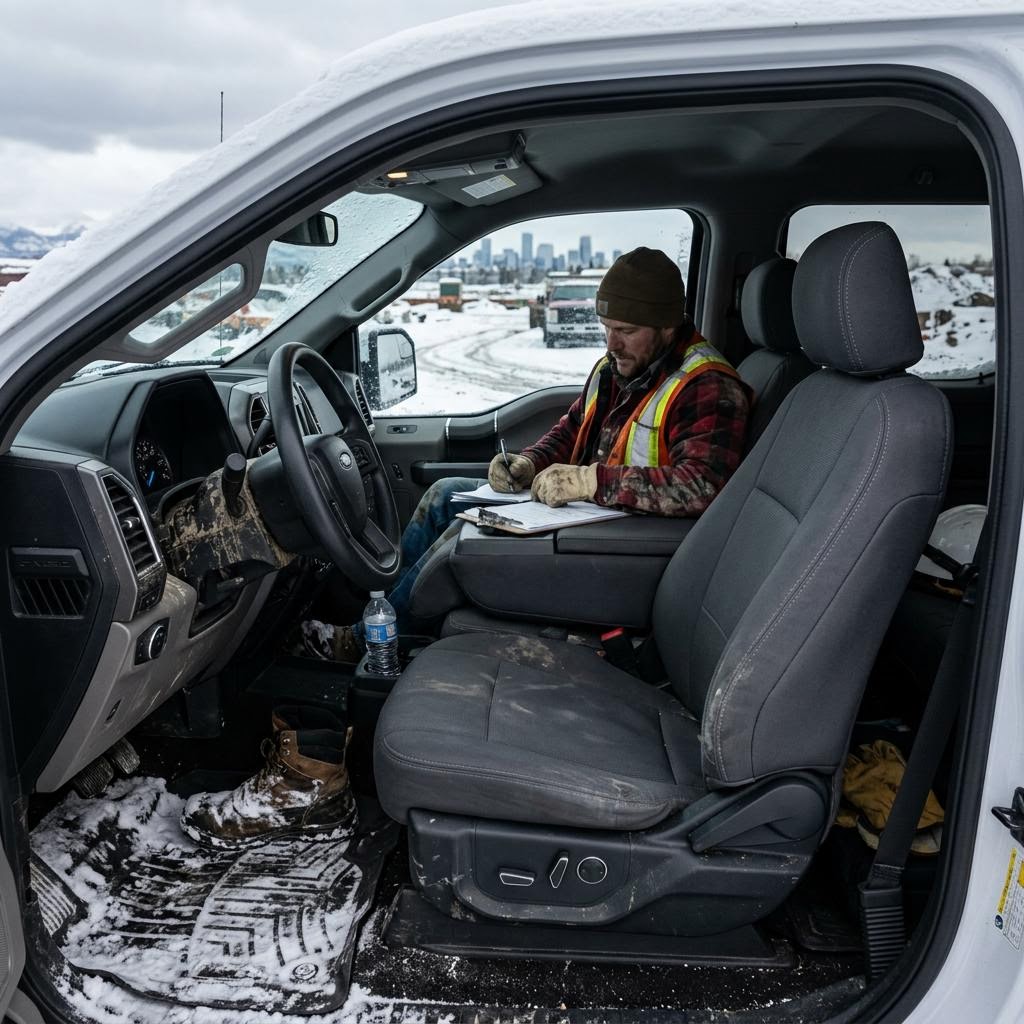
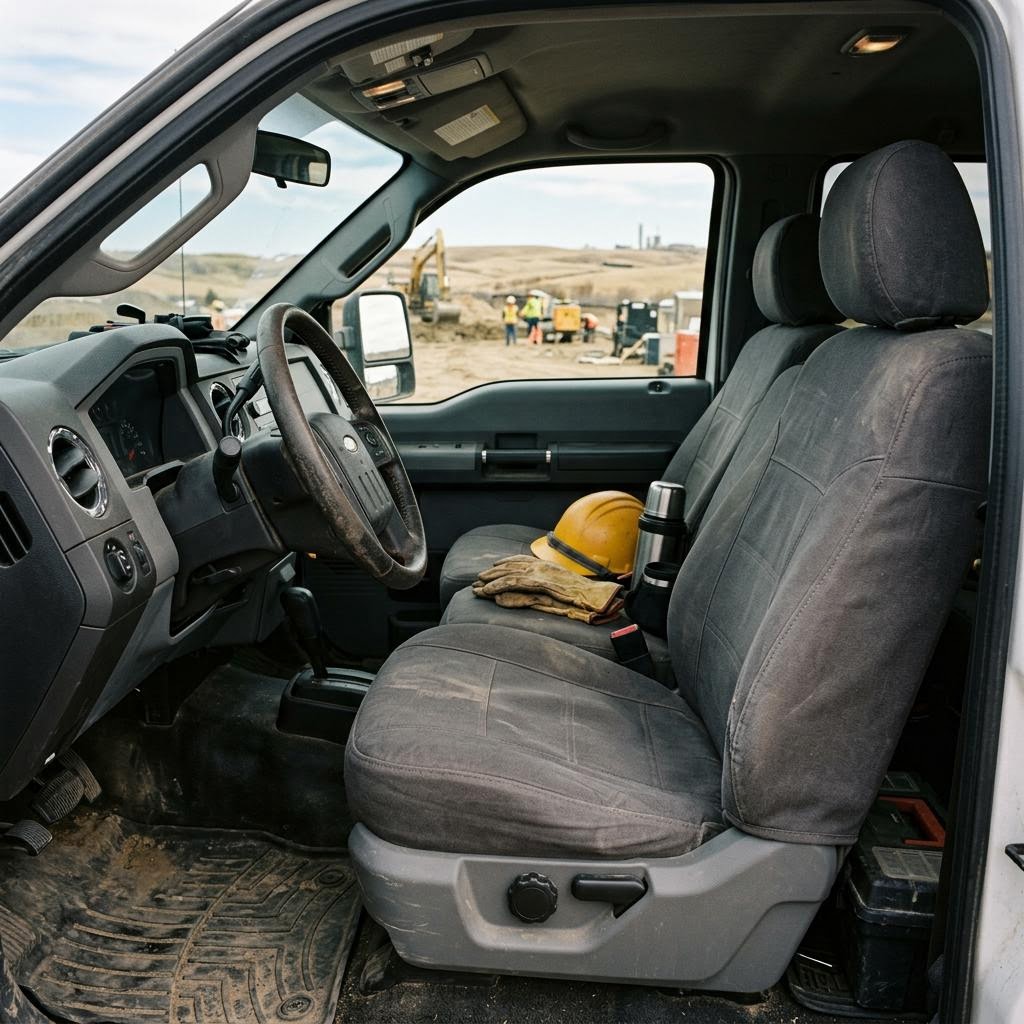
A work truck’s driver seat can see repeated entry and exit, dusty clothing, wet gear and shared drivers. For Calgary trades and fleet managers, buying should include cleaning and replacement, not just appearance when new.
Compare individual fit and materials in our truck seat-cover guide. For broader fleet identity and protection, see fleet graphics planning, vehicle-wrap comparisons and winter grille-cover checks.
1. Describe the job before choosing a fabric
List what reaches the seat: dust, damp clothing, grease, tools or food spills. A delivery vehicle differs from a highway truck. Identify wear on existing vehicles, especially the driver-seat outside edge. A cover is not permission to store sharp or unsecured tools on a seat.
2. Compare work-focused lines
Fia work-truck seat covers include the custom-fit Seat Protector commercial-grade polyester products described in the source. Request the exact pattern and cleaning instructions.
TigerTough: Its Ironweave range focuses on work-vehicle protection. Compare practical fit and cleaning rather than treating denier as a complete durability result.
ShearComfort: Compare material families for actual spill and abrasion exposure, and ask whether matching replacements are available.
Covercraft: Include it when comparing fit and material choices, keeping comfort and work-focused lines distinct.
3. Build a seat inventory
Record year, make, model, trim, cab and seat layout. Photograph headrests, centre seats, consoles and rear storage. Label fleet orders with vehicle and confirmed part numbers.
4. Require safety compatibility
Check vehicle guidance and product information for seat-mounted airbags, occupant sensors and related equipment. Confirm the exact combination. Straps must not interfere with wiring, tracks or controls, and buckles must remain accessible.
5. Trial one truck
Have a regular driver use the proposed cover through normal shifts. Check bunching, movement, comfort, storage and belts, then inspect after first cleaning. Winter clothing and worksite transitions make actual-user feedback valuable.
6. Price cleaning
Find out whether the cover is wiped, spot-cleaned or removed for washing. Ask about detergent, drying and reinstallation. Address moisture underneath rather than covering it indefinitely.
7. Compare the replacement cycle
Include shipping, installation time, cleaning labour and replacing the most-used section. Ask who handles fit problems and discontinued parts. Standardise only after a successful trial and review wear during vehicle inspections.